
Standard News Friday, 23 February 2024
Ομιλία του Ε. Μοντάνιου ως επίτιμου προσκεκλημένου στη δεξίωση του Ναυτικού Ομίλου Κύπρου
Speech by E. Montanios as guest of honour at the Cyprus Marine Club reception on 7/10/2023 about the establishment and function of the Cyprus Register of Ships between 1964 and 1974 when it operated in Famagusta,
with that port as the port of registration
with that port as the port of registration
Your Excellency
Shipping Deputy Minister
Mrs Marina Hadjimanoli,
Dear fellow members of the Cyprus Marine Club,
Dear guests, ladies and gentlemen.
I thank you for your presence, but above of all I would like to thank the Committee of the Club and especially the Chairman Captain Eberhard Koch for the long-standing invitation for me to speak on the subject and his repeated reminders. I also wish to thank the Secretary-General of the Club Mrs Julia Paczkowska for all the arrangements which she has made for the event.
The substance of my speech is based on my personal experiences since November 1966, when I started practicing law, at first as a trainee advocate, at the law firm which my late father Michael had established in Famagusta in 1951.
The information, however, on the particulars of the ships which were registered in the Register of Ships of Cyprus, having Famagusta as the port of registry I took from the book of Mr Georgios M. Foustanos entitled “Famagusta the Rise and Fall of a Ship’s Registry”, a book which, as the author states, had been suggested to him and was supported, by Mr Polys Vassou Hadjioannou in order to honour the memory of his father Vassos Hajioannou, as well as his uncle Loucas Hadjionanou, both of whom had been among the pioneers in registering their ships in the new Cyprus Register and in supporting its growth. A support, I am pleased to add, which is followed very fervently by Mr Polys Vassou Hajioannou.
The new era for Cyprus Merchant Shipping began by the enactment on 25th June 1963 of three Laws. The first Law, the Merchant Shipping (Registration of Ships, Sales and Mortgages) Law provided for a Register of Ships in which there should be registered all Cyprus ships. A Cyprus ship was defined as a ship more than half of the shares of which were owned by a Cypriot or a Cyprus Company.
The functions of the Registrar of Cyprus Ships and the maintaining of the Register were assigned by the Law to the Director of the Department of Ports of the Ministry of Communications & Works to be assisted by other officers of the Department. The Department was situated in Famagusta, just outside the port and the Walled city.
The second Law was the Merchant Shipping (Masters and Seamen) Law which contained provisions for all matters relating to the master and seamen employed on Cyprus ships. This law provided also for a minimum percentage of Cypriot seamen on Cyprus Ships.
The first Law was based on Part I and the second on Part II of the British Merchant Shipping Acts, which by virtue of the Courts of Justice Law, continued to apply to Cyprus after independence, subject to necessary modifications. The relationship of our law with the British Merchant Shipping Acts and English Law in general played an important role in the development of Merchant Shipping in our Republic.
The third law was the Merchant Shipping (taxing Provisions) law which provided that for a period of ten years from the passing of the Law no taxation would be imposed on the income derived by the owner of a ship registered in the Cyprus Register. It was also provided that the said period of tax exemption could be prolonged by the Council of Ministers.
Instead of income tax, an annual tax was imposed on each Cyprus ship, based on the tonnage of each ship.
There was also imposed a fee of £1 per month for each member of the crew who was not a citizen of Cyprus.
These taxing provisions were the ones which prompted Shipowners to start thinking about registering their ships in the Cyprus Register.
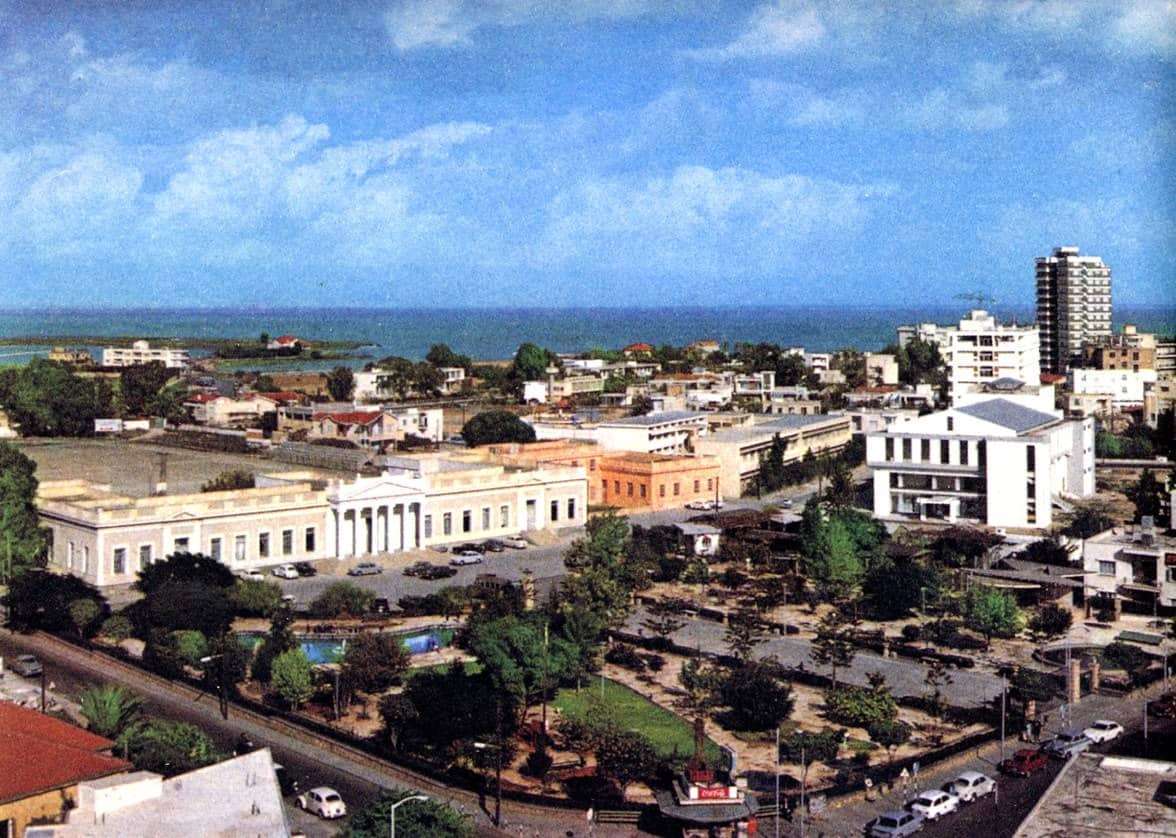
With the new legislation the port of Famagusta was determined as the port of registration of Cyprus Ships. Why Famagusta?
Before the establishment of the Republic of Cyprus, Famagusta was one of the official ports of registration in the British Empire for British Ships. There existed in Famagusta a Register of British Ships, which was kept by the Collector of Customs & Excise as Registrar. After Cyprus became independent the Register was used for registration of ships as Cyprus ships.
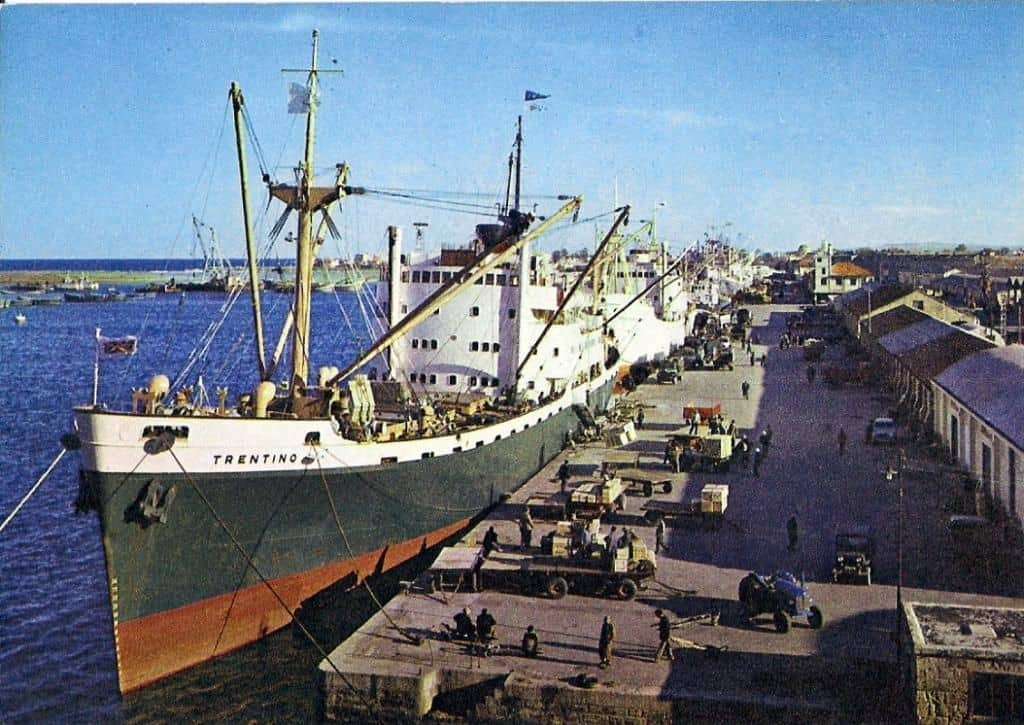
Famagusta was also the main port of Cyprus, a port which had been famous as an important port in the Mediterranean since the 12th century, as recorded in publications in Excepta Cypria.
Taking into consideration the important tax benefits and the freedom to employ qualified crew from all nationalities, Greek shipowners started registering ships in the Cyprus Register. Thus, five ships were registered in 1964. The number rose to 21 in 1965 and to 26 in 1966.
In December 1966 I became involved in the registration of ships in the Cyprus Register. My father had received instructions from London Solicitors for the registrations of ships belonging to Greek Shipowners based in London and he assigned the task to me.
The Director of the Department of Ports was at that time Captain Pavlos Rossides and was succeeded shortly thereafter by Captain Andreas Kantounas. The senior officer of the Department was Nicos Sergiou but the officer who was given the task of registration of ships was Pieris Pierides.
I found him very eager, devoted and studious in his duties. For guidance he referred, apart from our Laws, to a book ,which the Department had in its possession, from the time when Cyprus was a British colony, a book of Instructions to Registrars, issued by the British Registrar General of Ships in Cardiff. Such guidance was useful since the relevant Cyprus Law was as I have mentioned based on the English Merchant Shipping Acts.
Even though the Law appointed as Registrar of Ships the Director of the Department of Ports, in practice an administrative officer of the Ministry of Communications and Works was overseeing the applications for registration.
Every application for registration of a ship submitted to the Registrar of ships was forwarded by him with his remarks to the Ministry for final approval by the Minister.
Right from the beginning I came across a problem. Our Law allowed apart from permanent registration of a ship, the provisional registration of a ship, a very useful arrangement. The provision was the following:
"If at a port outside the Republic a ship becomes the property of qualified persons, the consular officer of the Republic there may grant to her master, on his application, a provisional certificate …" of registration.
The London Greek Shipowners and their London Solicitors wished that the provisional certificate of registration for the ship to be registered be issued in London, even though the ship would not be found at the port of London at the time. The view of the government was that the ship herself should be at the port where the consular officer was to issue the provisional certificate of registration.
I argued that such interpretation would constitute a great impediment to the registration of ships in the Cyprus Register, since Cyprus had consular officers in very few ports in the world and it would be a problem for shipowners to arrange that their ship be found in such a port at the time when they wished the transfer to the Cyprus Registry to take place.
Further, from a legal point of view, I argued that, according to both Cyprus and English law, property is transferred at the place where the bill of sale is executed and delivered from the seller to the buyer, irrespective of where the property may be at the time.
I presented my arguments to the administrative officer at the Ministry in charge of Merchant Shipping Michael Vassiliades. (In parenthesis I would mention that I have invited him to attend but he could not because of reasons of health. I promised to send him a video of my speech). He told me that the position of the Government was based on an opinion by the office of the Attorney-General. I then discussed the natter with the Permanent Secretary of the Ministry Mr Panayiotis Kazamias and finally with the Minister of Communications & Works Mr Titos Phanos. As Michael Vassiliades informed me he was instructed to discuss the matter with the Attorney-General. The Attorney-General accepted the arguments which I had advanced and issued an opinion that a Cyprus Ship might be registered provisionally in the Cyprus Register at a port outside Cyprus if the bill of sale in executed and delivered of that port, even if the ship is not found there.
Another problem which existed in relation to the registration of ships in the Cyprus Register was the provisions of the Exchange Control Law and the policy of the Central Bank regarding the issue of permission to non-residents of the Sterling Area to take shares in a Cyprus company.
The Exchange Control Law which was enacted when Cyprus was a British colony included Cyprus among the scheduled territories which constituted the sterling area. It was later, in 1972 , when, by an amendment of the Law that the Republic of Cyprus was substituted for the Scheduled territories and the Cyprus pound for the sterling.
According to the Exchange Control Law, any non-residents of the sterling area who wished to subscribe to the memorandum of a Cyprus Company and to take shares, required permission from the Central Bank. The policy of the Central Bank was that permission could be granted only for up to 49% of the shares in the company. The remaining 51% should be held by residents, who should not be nominees of non-residents.
After discussions with the then Exchange Control Officer of the Central Bank, the late Spyros Plousiou, the Bank made an exception to its policy and agreed to grant permissions for all the shares in a Cyprus company to be held by non-residents, on condition that the objects of the company be confined to the registering of ships under the flag of the Republic and to any matters incidental thereto.
Another associated problem emanating from the Exchange Control Law was the obtaining of loans by companies having non-resident shareholders.
At the beginning of 1967, the additional conditions subject to which the Central Bank gave its above-mentioned permission to the shareholders were the following:
"The company will not be permitted to borrow in the Scheduled Territories (Sterling Area). Any borrowings from sources outside the Scheduled Territories, will require the prior approval of the Exchange Control."
At a later stage the said conditions were substituted with the condition "any additional finance required by the company will be received in full from External Account sources, unless exchange control approval has been obtained otherwise."
When relevant permission were required, the Central Bank gave permissions.
Another issue at the time was the concern of foreign banks, especially those from the United States and Canada, like the National Bank of North America , Irving Trust and Bank of Nova Scotia, about lending to shipowners on the security of a mortgage on a ship registered in the then unknown Cyprus Register. These concerns were overcome by the explanation of the provisions of Cyprus legislation. It was a crucial advantage that the provisions of our law relating to the registration of Cyprus Ships and mortgages on such ships, as well as all matters relating to mortgages were based on English law.
The procedure for sending by the Registrar of Ships Instructions for the provisional registration of a ship at a port abroad by a consular officer was at a time before the advent of faxes and e-mails, as follows: The Registry Officer would type the Registrar’s instructions to the Cyprus Consul on the appropriate CYTA form, would stamp it and hand it to the applicant’s representative. The representative would take the form to CYTA pay the cost of despatch and then bring back to the Registrar a copy of the cable stamped by the CYTA confirmation of receipt.
In those early years of the Cyprus Registry there was scepticism about the Cyprus flag, because of accidents with some Cyprus Ships which were overaged. There were also the accusations by the International Transcript Federation that the Cyprus flag was a flag of convenience.
Despite the above, the Government of Cyprus showed serious interest in the development of merchant shipping and did what it could to face the problems.
For example, even though at first only a small number of clarification societies were recognised regarding Cyprus Ships, the Government proceeded and recognised almost all well known Classification Societies.
Further, the countries, other than Cyprus which could issue certificates of competency for Cypriot masters and seamen at first only Greece, Turkey and United Kingdom were considerably extended.
Also, in order to face the various certifications which were required at ports where Cyprus vessels sailed, and had no Cyprus consuls the Government specially authorised Greek and English consular officers to issue such certification on its behalf.
In 1972 an ad hoc committee was formed of three advocates who were involved in registering ships and mortgages in the Cyprus register. They were the late Chrysses Demetriades, replaced occasionally by Efti Psillaki, Costakis Velaris and myself. The aim was to engage with the Government in efforts to develop further the Cyprus Merchant Shipping. To this end, meetings were held from time to time with the permanent Secretary of the Ministry of Communications & Works Mr Panayiotis Kazamias and the Administrative Officer of the Ministry dealing with Shipping first Mr Michael Vassiliades and later Mrs Elli Charalambous-Vassiliades. The Government was always eager to follow suggestions and take steps for developing Merchant shipping.
The fact that issues affecting foreign shipowners were addressed allowed those affected by them, to proceed and take advantage of the benefits offered by the registration of ships in the Cyprus Register. The number of ships which were registered in the Cyprus Register continued to increase year after year. 45 were registered in 1967, 53 in 1968, 76 in 1969, 103 in 1970, 96 in 1971, 198 in 1972 and 201 in 1973, and another 80 until 14/8/1974. That was the date when, following the Turkish invasion, the Turkish troops in a second advance occupied further parts of Cyprus, including Famagusta.
The development of Cyprus Register of Ships until then was considered by the Greek and International Shipping Press impressive and indeed it was. It had received support, from Cypriot shipowners like Vassos Hajioannou, Loucas Hajioannou, Kyriacos Mouskas and N. Papathomas. The majority of the Ships registered were controlled in the first years mainly by Greek shipowners. In later years German shipowners followed Greek shipowners in the number of ships registered.
The capture of Famagusta by the Turkish army gave rise to grave concerns to the Shipowners who had ships registered in the Cyprus Register and to the banks which had granted loans on the security of mortgages recorded in the said register.
A few days after the end of the second phase of the invasion and my release from the army, I was able to start communicating with clients, both shipowners and banks and to try and calm their fears. I was offered working facilities very kindly by the late Prodromos Papavassiliou at their Nicosia office of his Company Shoham. It was Nicosia, because my brother Acis has been treated at the Nicosia hospital after been critically injured in the battles when, with self-sacrifice, he tried to help an injured soldier of the troop he was commanding as second lieutenant.
The Government reacted quickly to the problem that the port of registration was captured by the Turks. By a Law published on 27th September 1974 the port of Limassol was substituted for the port of Famagusta as the port of registration of all ships registered in the Cyprus Register.
The actual Register remained in occupied Famagusta, but it became possible to reconstruct it. The Ministry assigned the task to Pieris Pierides, the officer who had been keeping it in Famagusta. He first gathered all information available at the Ministry, since all applications for registration had to be finally authorised by the Minister. Then he travelled to London where he gathered information from the Cyprus Consular Officer there. That Consulate was the one where most of the provisional registrations of Cyprus Ships took place. The Consular Officer Mr Beha, a Turkish Cypriot was very efficient and popular with London Solicitors. Pieris Pierides also gathered information from other Cyprus Consulates where provisional registrations took place, mainly Athens and Hamburg. Finally, |Mr Pieris Pierides gathered information from the Income Tax office which held information about the tonnage tax and crew fees paid by Ships. After all the research the Register of Cyprus Ships was reconstructed. Mr Pierides has responded to my invitation and is present here. Please give him a warm applause to thank him for all his devoted services. He was the soul of the Cyprus Register of Ships all those years.
The name of the port of registration changed, but the Register of Cyprus Ships remained alive, and the years when it functioned in Famagusta had laid the firm foundations upon which today’s impressive Cyprus Shipping cluster was built.
I cannot end this talk without expressing the hope that, despite the talk by Turkey and the Turkish Cypriot leader for a two state solution of the Cyprus problem, it may be possible for a solution to be finally reached on the basis of the relevant Security Council resolutions and for the Republic of Cyprus to be transformed into a federation of two States with political equality without Turkish troops and guarantees. A solution by which the Greek-Cypriot federated state will include many of the now occupied areas, including Famagusta.

